PSLE Intensive & Mock Exams 2026 are open · Find out more →

Primary 3 · Foundation year · Singapore

Primary 3 Math Tuition, built to click

P3 is the year word problems and heuristics arrive, and the year quiet gaps start to form. At Genius Plus Academy we build number sense, the bar model and the 4-Box Planner early, in classes capped at 6, so the foundation holds and the P5 to P6 cliff never comes. Diagnosis-first, taught from our own in-house books.

P3 to P4 classes capped at 6 Every lesson recorded Weekly personalised marking

Part of the P1 to P6 primary system · last reviewed 20 Jun 2026
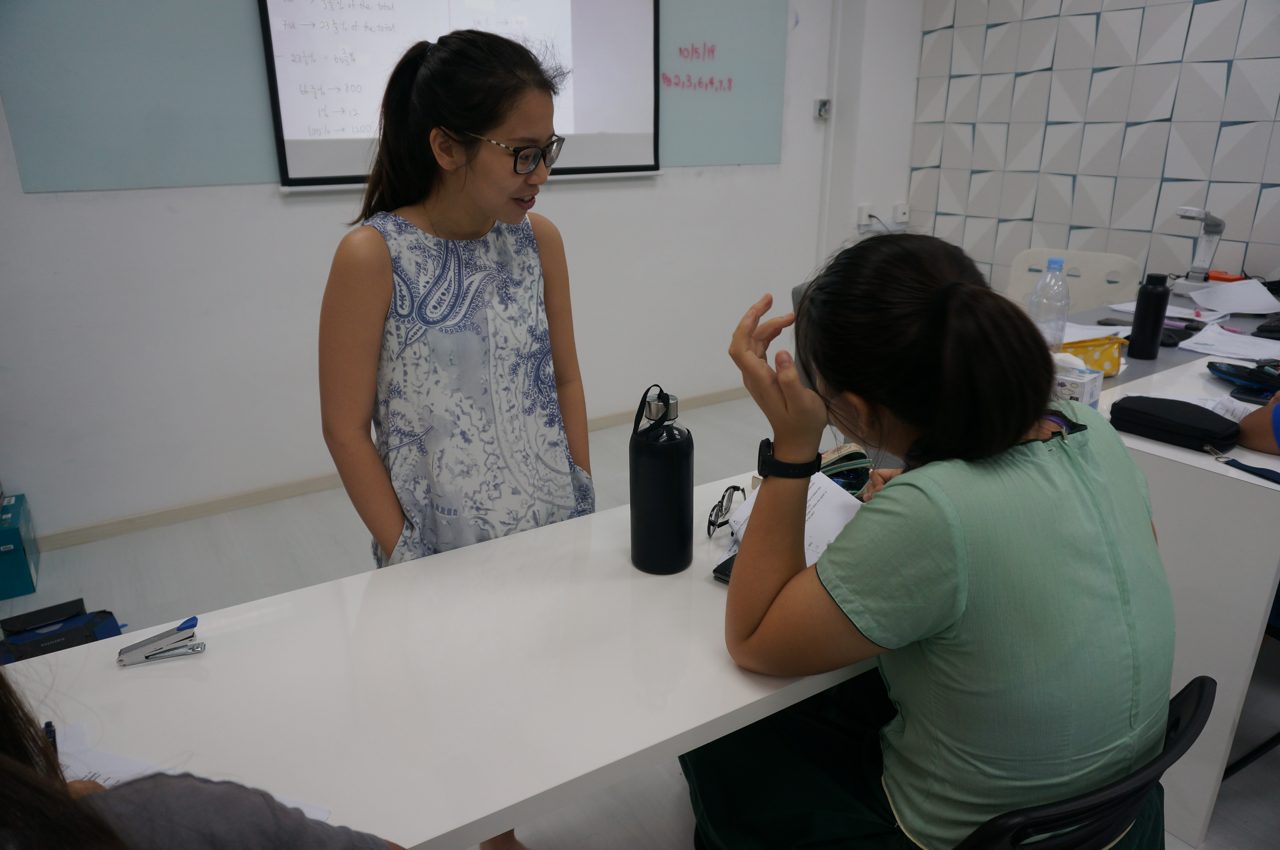
A Primary 3 student working through a bar-model word problem at Genius Plus Academy

What we build in P3

  • Number sense: place value, mental strategies and a real feel for size, not rote sums.
  • The bar model, from day one: we draw the problem until its structure is visible.
  • The 4-Box Planner: given, asked, relationship, plan, so word problems stop being scary.
  • Startability: the confidence to begin a hard question instead of freezing.
The primary foundations specialists

6 max per P3 class4 boxes to plan any problem60+ in-house textbooks
Meet Mrs Eileen Toh →

Why P3 is the year that matters

P3 is where word problems stop being optional.

Up to P2, most marks come from sums a child can do in their head. From P3, the questions start asking children to read, model and reason. A child who never learns to set a problem up properly here often looks fine until the syllabus jumps at P5, then suddenly does not. We close that gap before it opens.

Build number sense first

Before any heuristic, a P3 child needs a feel for number: place value, fast and accurate mental strategies, and a sense of when an answer is simply too big or too small.

The bar model, drawn early

We do not ask a P3 child to memorise a method, we draw it, one bar at a time, until the structure of the problem is visible. Introduced early, it becomes the visual language they will rely on all the way to PSLE.

The 4-Box Planner

Four questions before any working: What is given? What is asked? What is the relationship? What is the plan? It is how a child who used to freeze learns to start.

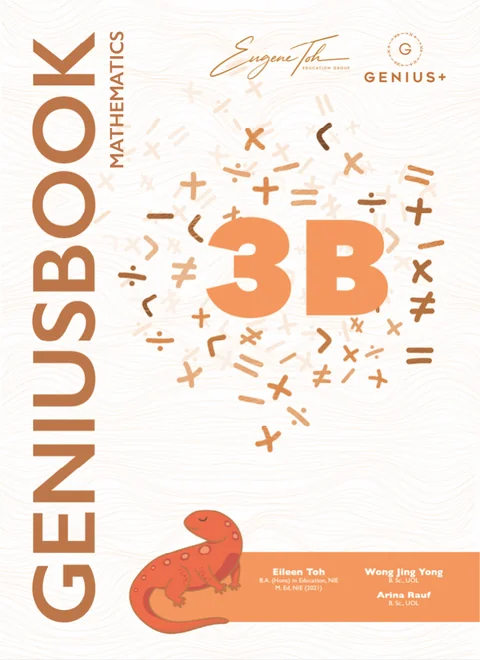
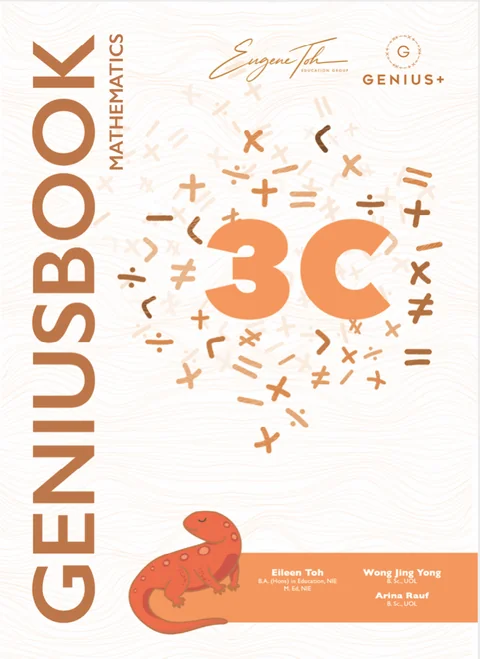
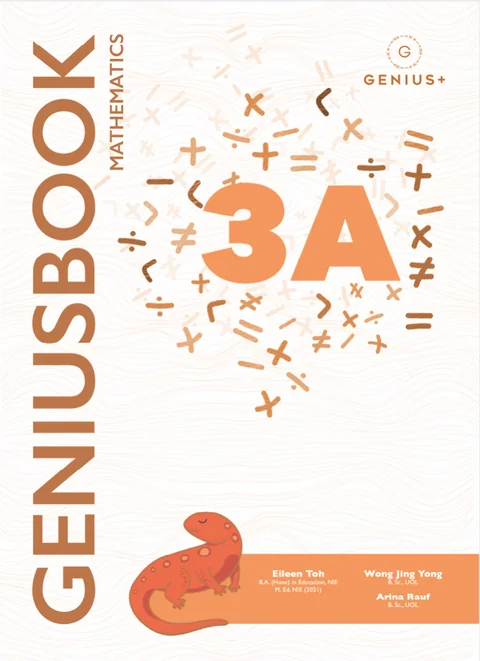
Genius Plus Academy in-house primary math workbooks for Primary 3

Taught from our own books, not a resale workbook.

Your P3 child learns from a complete, in-house curriculum, we write and publish our own, 60+ textbooks and 40+ workbooks, refined over eight years. The P3 GENIUSBOOK covers each term; topic workbooks drill the exact structures that build a foundation for the years ahead.

See how we write our materials →

Why we start the foundations now

The P3 skills are the ones the PSLE still rewards in P6.

We tagged every PSLE Math question from 2012 to 2025 and counted what the papers actually test. The structures a P3 child meets for the first time, fractions and the visual reasoning behind the bar model, are the same structures that dominate the exam years later. Building them now is not early, it is on time. These figures describe papers already sat, never a prediction.

78

Fractions, a topic that starts in earnest around P3, turns up in every one of the fourteen PSLE years we counted.

4

Boxes in the 4-Box Planner. We teach the same four questions in P3 that strong P6 students still use under exam pressure.

6

Maximum students in a P3 class, so the bar model is checked over every shoulder, not taught to a crowd.

See how part-whole and fractions are tested at PSLE →

The right home for P3 math

Give your P3 child a steady weekly track.

For most P3 families, the answer is simple: a steady year-round home for math, where the foundation is built deliberately every week. Not sure if weekly is what your child needs yet? We will tell you honestly at the diagnostic, and if all they need is a lighter touch, we will say so.

Already a GPA student? You do not need to choose from here, your teacher will recommend exactly what your child needs.

Schedule & fees

P3 weekly classes, Bukit Timah, Punggol, Pasir Ris & online.

Live availability
ClassDay & timeBranchAvailability
P3 MathThursday, 3pm to 4:30pmBukit Timah (Coronation Plaza)Places available
P3 MathThursday, 5pm to 6:30pmPunggol (Edgedale Plains)Places available

Live class availability, refreshed from our class roster (last updated 2026-06-22). Current fees are confirmed at your free diagnostic consult, and financial assistance is available case by case for families with genuine need.

AL5AL1over the primary journey
"When my daughter got AL5 in her P6 SA1 Math exam, I was desperate. Ms Eileen responded promptly and even requested to see my daughter's test paper first. Just 2 months later, my girl improved to AL3 in Prelims, and eventually scored AL1 at PSLE."
Hong, parent of a P6 student · more journeys on our results page

A diagnosis-first response like this is exactly why we build the planning habit from P3. Based on GPA's internal tracking of recent cohorts; individual results vary with each student's starting point and effort.

Free for P3 parents

The "Is my P3 child on track?" checklist

The signs of a strong P3 foundation, and the early warnings that a gap is forming before it shows up in a grade. A two-minute read that tells you where to look.

P3 math, questions parents ask

Is P3 too early for math tuition?

Not at all, P3 is often the ideal time. It is the year word problems and heuristics arrive, so the habits a child forms now carry all the way to PSLE. We start with a free diagnostic and tell you honestly whether tuition is needed yet, or whether your child is simply finding their feet.

How big are the P3 classes?

P3 classes are capped at 6, smaller than our upper-primary maximum of 8, so a teacher can check every bar model over every shoulder. Every lesson is recorded for rewatching, homework is marked with personalised feedback weekly, and 1-to-1 consults are unlimited at no extra charge.

My P3 child freezes on word problems. What helps?

Freezing is almost always a startability problem, not a lack of ability. We teach the 4-Box Planner, given, asked, relationship, plan, and the bar model so the child always has a way to begin. Once they can start, the rest usually follows.

Why does GPA make such a point of the bar model in P3?

The bar model is our visual signature, and it is the language strong students use right through to PSLE. Introduced early in P3, it becomes second nature, so when the syllabus jumps at P5 the child already has a tool that makes the structure of a hard problem visible.

Do you offer a trial lesson?

Yes, a free trial lesson, one per child, starting with a short diagnostic. We usually reply within the hour. No pressure, no hard sell, we would rather you make a properly informed decision than a rushed one.

Start here

Build the P3 foundation while it is still easy.

Book a free trial and diagnostic, we will look at your child's work and tell you what we see, whether or not you ever join us.

Free trial · about an hour · a real diagnostic · no obligation, no hard sell.

Book a Free Trial