Primary Math · P1 to P6 · the year-round weekly programme · join the current term any week · Book a free trial →

Weekly Programme · Primary 1 to Primary 6

Primary Math tuition, the year-round system

The PSLE rewards a foundation built over years, not a sprint at the end. We build that foundation week by week, from Primary 1, so the marks come from understanding that holds.

A weekly small-group programme that starts with diagnosis, not worksheets. We find where marks are actually being lost, then train the five capabilities the PSLE measures, using over 100 of our own learning materials. Lessons run all year and you can join the current term any week.

Small classes, max 8 Onsite or Zoom Every lesson recorded
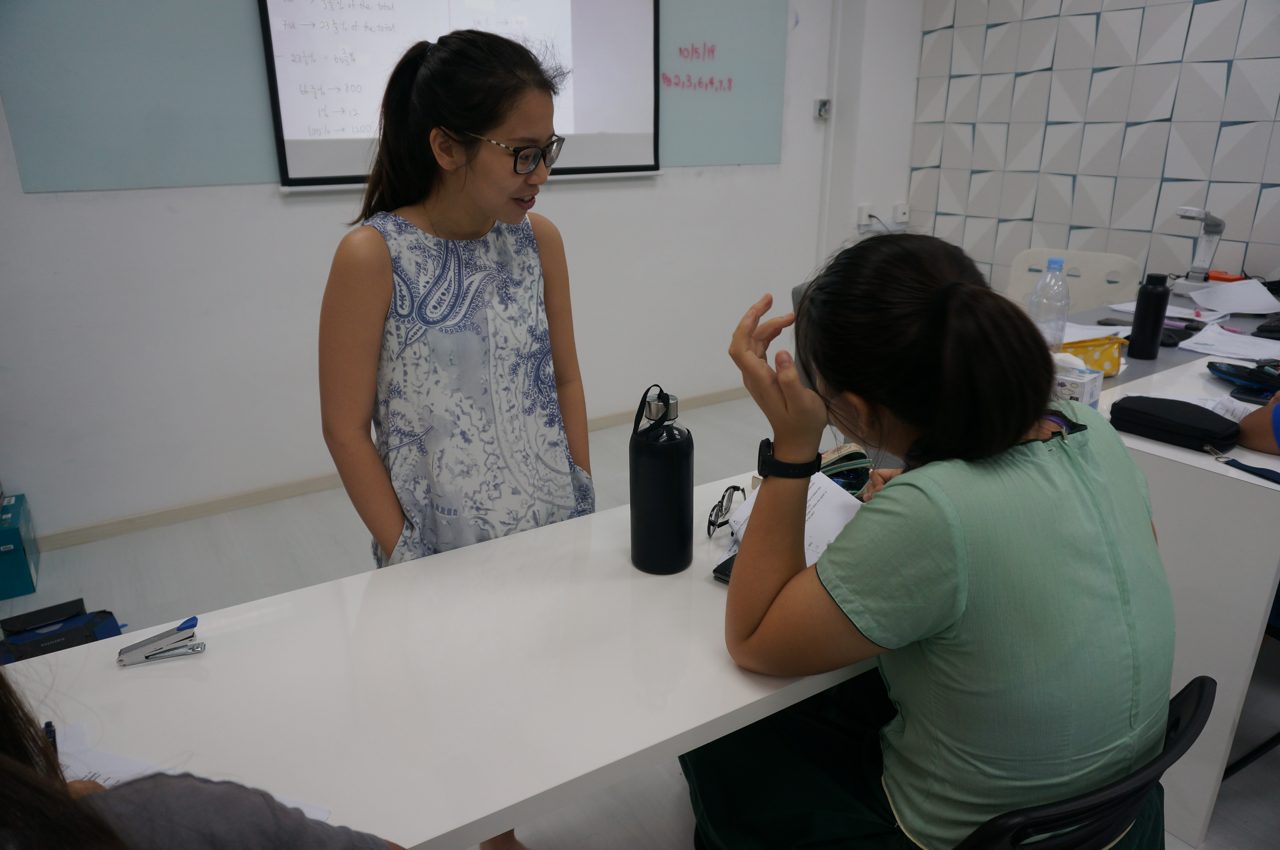
A Genius Plus Academy tutor teaching a small Primary Math class Inside a weekly Primary Math class

P1 to P6

levels covered

5

capabilities trained

100+

in-house materials

Ongoing weekly · join anytime

This is a year-round programme that follows the MOE school terms, so there is no single intake date to wait for. Most families start with a free trial in an existing class, then join the current term. If your child joins partway through a term, fees are pro-rated to the lessons remaining. A foundation is built week by week, so any week is a good week to start.

Book a free trial →

A system refined over years of classroom use

5 capabilities100+ materialsP1 to P6 arc
See free worked solutions →
A Genius Plus Academy tutor diagnosing a Primary student's working before teaching

How it works

Diagnosis first, teaching second.

Most tuition begins with worksheets. We begin with a question: where are marks actually being lost?

More practice only helps when it changes the mistake pattern. So before we add volume, we read your child's working and sort the errors into types: a fluency gap, a process slip, a method-selection error, or simply not knowing how to start. The diagnosis decides what happens next, week by week, instead of handing every child the same pile of pages.

1 · Diagnose

Find the top error patterns from real working.

2 · Train

Build the capability the marks depend on.

3 · Verify

Mark weekly, confirm the pattern has changed.

What the weekly system builds

The five capabilities the PSLE actually measures.

A good PSLE score is not one skill. It is five, and most "careless" or "understands at home but fails in exams" problems trace back to a gap in one of them. We train each, deliberately, across the primary years.

Foundation Fluency

Speed without panic. Tables, mental math and number sense fast enough that the harder thinking has room to breathe.

Tables & mental math

Process Discipline

In Singapore, "careless" is usually a systems problem, not character. The 3-Pass Checking Protocol gives a routine: question compliance, reasonableness check, arithmetic audit.

3-Pass Checking Protocol

Startability

Many children can compute but cannot start. Word problems overload comprehension, structure and method choice at once. The 4-Box Planner breaks that open.

4-Box Planner

Structural Recognition

Method choice, not topic memorisation. We teach heuristics as decision trees: read the structure, then reach for the right tool, including the bar model and the Big 5.

Bar model & the Big 5

Exam Execution

The gap between home and exam hall. Weekly mini-mocks, mistake classification and stamina conditioning, so understanding survives pressure and timing.

Weekly mini-mocks

"From let me try a few things, to I know exactly what this is."

That shift, repeated across five capabilities, is what a year-round system delivers and a last-minute push cannot.

What the paper rewards, built in from P1

A year-round system can build the basics in early. A last-minute push cannot.

We tagged 709 PSLE Math questions across 2012 to 2025 and counted what the paper actually rewards. The pattern is steady and learnable, which is exactly why starting early works: the foundations the PSLE leans on every single year are the ones we build from P1.

78

Fractions, the workhorse

The most-tested content area of the whole paper, and it appears in every one of the fourteen years. Fluency here pays off everywhere else.

8

Content areas, every year

Eight areas, from fractions to area and perimeter to angles, have appeared in all fourteen papers. They make a quiet checklist of what a child must own.

~44%

Two habits, much of the thinking

Turning words into units, and treating the whole as the sum of its parts, underlie close to half the non-routine thinking. Both are what the bar model trains.

See the full most-tested PSLE Math analysis, 2012 to 2025 →

Heuristics, taught as a system

Not tricks. A toolkit your child learns to choose from.

Heuristics fail when students treat them as a lottery. We teach them as decision trees: identify the structure, then select the strategy. The bar model anchors the lower-primary work, and the Big 5 grow with your child toward the PSLE.

Work backwards

Start from the answer and unwind the steps to the start.

Before & after

Track what stays constant: a part, a total, or a difference.

Guess & check

Structured, not random, with each guess narrowing the next.

Pattern spotting

Turn a sequence or figure into a rule, then a formula.

Simpler case

Shrink the numbers to see the method, then scale it up.

And the bar model, properly taught

The bar model is where many children first learn to make a word problem visible. We teach it as a thinking tool that connects fractions, ratio, percentage and comparison, so it keeps working in upper primary instead of being abandoned at P4. Used well, it is the bridge from understanding to a clean, marks-visible solution.

Who it suits

It works at both ends of the class.

The weekly programme is a good fit if your child:

  • is doing well, but loses easy marks to rushing and weak checking;
  • understands at home, then under-performs in school exams;
  • freezes on word problems and is not sure how to start;
  • has tried tuition that added volume without changing results;
  • avoids math, where avoidance is protection from overload, not laziness.

Already strong

Process discipline and structural thinking stabilise the top end, where the last marks usually go.

Inconsistent

A reliable structure, so a hard-looking question stops feeling random.

Avoidant

Easy starts and small wins rebuild competence before the challenge rises.

What's included

Every week, the same complete system.

  • Small-group lessons, onsite or on Zoom, capped at 8 and smaller for lower primary, so every child is seen.
  • Our own textbooks and workbooks, level-specific, assigned to fit your child's diagnosis.
  • Weekly personalised marking, used to identify specific gaps and not simply ticked.
  • An in-class exit question to close every lesson, solved independently before your child leaves.
  • Recorded lessons on the LMS, so a missed week or a tricky topic can be replayed any time.
A Primary student working through a Genius Plus Academy exit question

Built, not bought

The system is in the materials, not just the tutor.

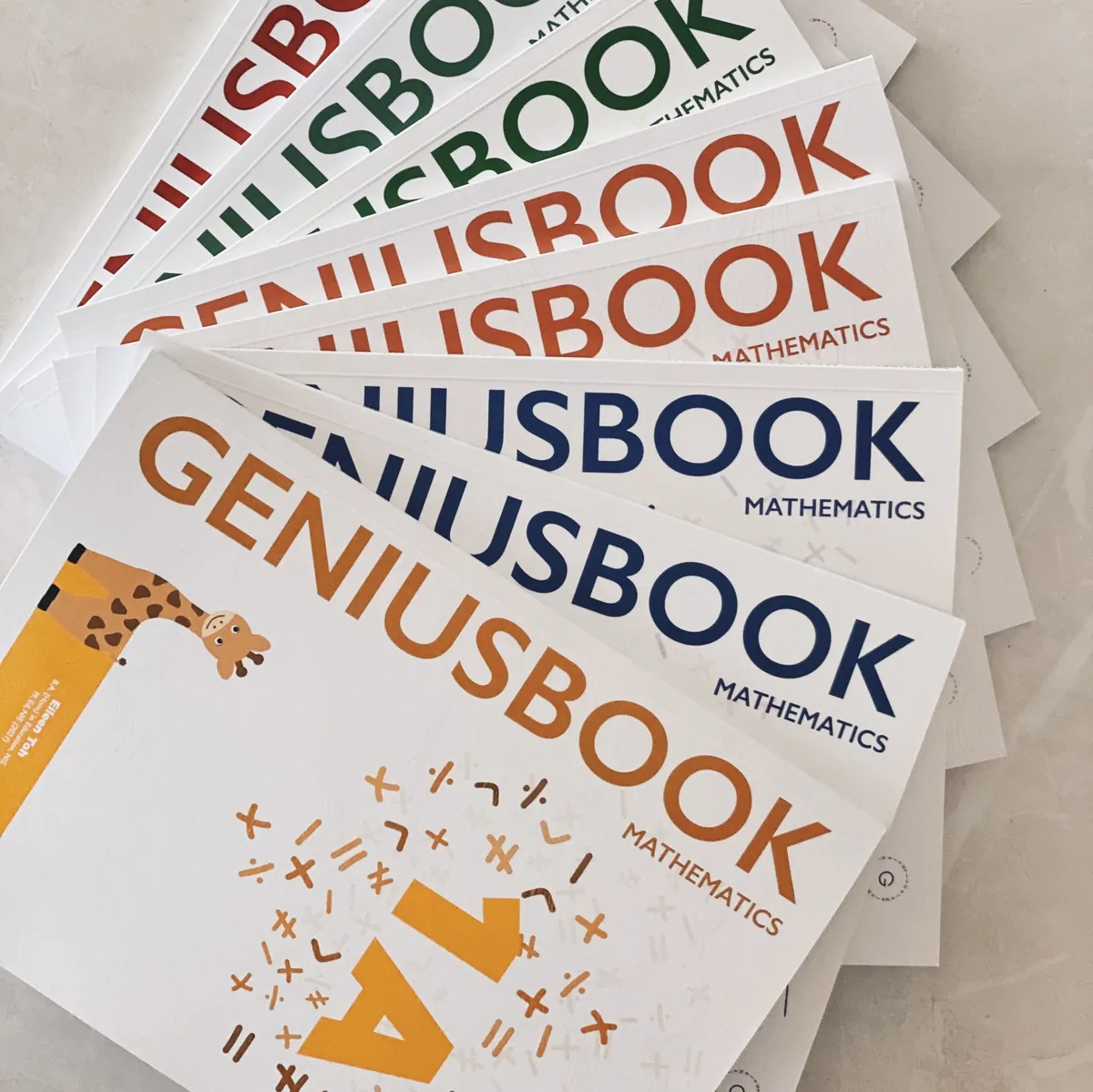
At many centres the tutor's quality decides your child's experience. Here the methodology is embedded in over 100 learning materials: we write and publish our own, 60+ textbooks and 40+ workbooks, refined over years of classroom use. Whichever tutor teaches on a given week, your child follows the same deliberate progression. The tutor delivers the system; the system delivers the quality.

The long view

One curriculum, from P1 to the PSLE.

The same five capabilities run through every level, deepening as the syllabus grows. Lower primary builds fluency and the bar model; upper primary layers on heuristics, exam execution and PSLE-grade word problems.

P1 & P2

Number sense, fluency and the bar model. The smallest classes, so habits start clean. Lessons run 1.5 hours.

P3 & P4

Startability and structural recognition take centre stage. Word problems get a planner; checking becomes a routine.

P5 & P6

Exam execution and the full heuristic toolkit, with extra lessons built in to prepare for the PSLE. Lessons run 2 hours.

See how the levels connect across the programme →

A Primary student looking forward to a Genius Plus Academy lesson

In a parent's words

"We found this centre via Google. My child made improvements quickly and now looks forward to the lessons. The tutors follow up with feedback after every school exam. Huge kudos to Mrs Toh and the entire teaching team for their commitment!"
K Oh, parent

Based on GPA's internal tracking of recent cohorts; individual results vary with each student's starting point and effort. More on our results page.

Taught by

The teachers who wrote the system.

Mrs Eileen Toh, Founder of Genius Plus Academy

Mrs Eileen Toh

Founder & Curriculum Architect

Former MOE teacher, M.Ed (NIE). She authored the five-capability curriculum and the materials the weekly programme is built on.

Ms JS Lee, Head of Primary Math at Genius Plus Academy

Ms JS Lee

Principal Tutor · Head of Primary Math

B.Sc. (Hons), years of teaching under Mrs Toh. She also runs the optional diagnostic consult for parents who want a structured start.

How to start & fees

Three calm ways in, no pressure.

Free trial

Sit in an existing class, any timing that fits, at no charge. The most common way families begin.

Join the term

Register and start the current term. Joining partway through, fees are pro-rated to the lessons left.

Diagnostic consult

A structured one-hour assessment with Ms Lee for parents who want a clear picture first.

Locations

Bukit Timah (Coronation Plaza) · Upper Thomson · Pasir Ris · Punggol · or live on Zoom. The same system and materials at every venue.

Fees

Because this is a year-round programme with different levels, formats and class sizes, we quote your exact fees at the diagnostic consult, once we know your child's level and the class that fits. There are no surprises, and nothing to commit to before you have seen the room.

  • Term-based billing that follows the MOE terms
  • Onsite or Zoom options at every level
  • Sibling and multi-subject savings available
Book a free trial to get your quote

Financial assistance is available case-by-case for families with genuine need. Ask us in confidence.

Free preview, no pressure

See how we teach, before you decide.

We will send a sample of our materials and a worked example, so you can see the diagnosis-first method and the bar model in action before booking a trial.

Specific gaps to close before P6?

P4/P5 Expedite is the faster track.

If your child has specific gaps to close before P6, the P4/P5 Expedite programme accelerates the weekly system to shore up the foundation while there is still time to make it count.

Questions parents ask

Can my child join partway through a term?

Yes. This is an ongoing weekly programme that follows the MOE school terms, so there is no single intake date. Most families start with a free trial in an existing class, then join the current term. If your child joins partway through, fees are pro-rated to the lessons remaining, and recorded lessons let them catch up on anything already covered.

What do the fees work out to?

Because the programme runs across levels, formats and class sizes, we quote your exact fees at the diagnostic consult, once we know your child's level and the class that fits. Billing is term-based, sibling and multi-subject savings are available, and financial assistance is offered case-by-case for families with genuine need.

Is GPA suitable if my child is already doing well?

Yes. Strong students often lose marks on easy questions through rushing, misreading and weak checking routines. Process discipline and structural thinking stabilise the top end, which is exactly where the last few marks tend to go.

My child understands at home but fails school exams. Why?

Exam conditions change everything: pressure, timing, retrieval and working alone. At home, a hint quietly lowers the difficulty. We close that gap with exam-execution training, mistake classification and weekly mini-mocks, so understanding survives the exam hall.

How do you fix careless mistakes?

We treat "careless" as a systems problem, not character. The 3-Pass Checking Protocol gives a structured routine of question compliance, reasonableness check and arithmetic audit, and mistake logs convert vague carefulness into a trainable habit.

Do you teach PSLE heuristics and the bar model?

Yes, as a system rather than tricks. The bar model anchors the lower-primary work and keeps working into upper primary, and the Big 5 heuristics, work backwards, before and after, guess and check, pattern spotting and simpler case, are taught as decision trees your child learns to choose from.

What if my child misses a lesson?

Every lesson is recorded on the LMS, so a missed week, or a topic that needs a second pass, can be replayed any time. The weekly marking and the exit question still tell us where to focus when your child is back in class.

Join the current term

Build the foundation the PSLE rewards.

Start with a free trial, or a diagnostic consult, and we will tell you honestly where your child is and what the next step looks like.

Book a free trial