Primary 4 · Math · Singapore
At Genius Plus Academy, Primary 4 is treated as the year it really is: the streaming-pressure year and the run-up to a much heavier P5. We build mastery of fractions, factors and multiples, and area and perimeter, then set up a clean P4 to P5 acceleration path. Small classes (max 6), every lesson recorded, taught from our own in-house books.
Built for the 2026 Primary 4 cohort · last reviewed 20 Jun 2026
What we build in P4
The pivot year, handled early
How P4 math is taught here
P4 is often the year the pace changes. Streaming conversations begin, fractions turn abstract, and the gap between P4 and the heavy P5 syllabus is wider than many families expect. Our approach is diagnosis first: we find exactly where a child is strong and where they wobble, then close the specific gaps so P5 starts from solid ground rather than a scramble.
Equivalent fractions, comparing, and adding and subtracting with related denominators. We anchor every step in the bar model, because P5 fraction-of-a-quantity and ratio work is built directly on this foundation.
Factors and multiples sharpen the number sense behind later topics, while area and perimeter of squares, rectangles and composite shapes carry straight through to PSLE Paper 2. We teach the structures, not one-off tricks.
Once the P4 gaps are closed, we set up a deliberate run into P5. The diagnostic decides the pace, so a confident child can press ahead while a child with gaps shores them up first.

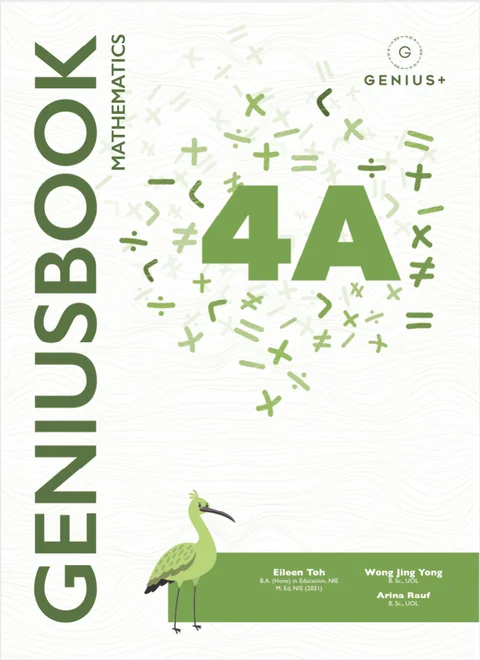
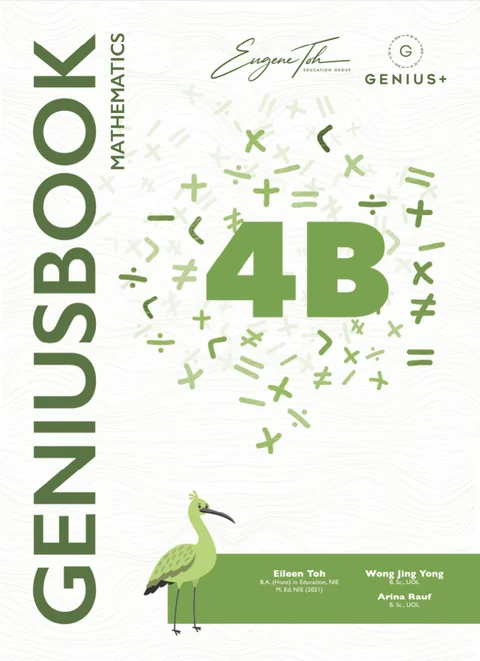
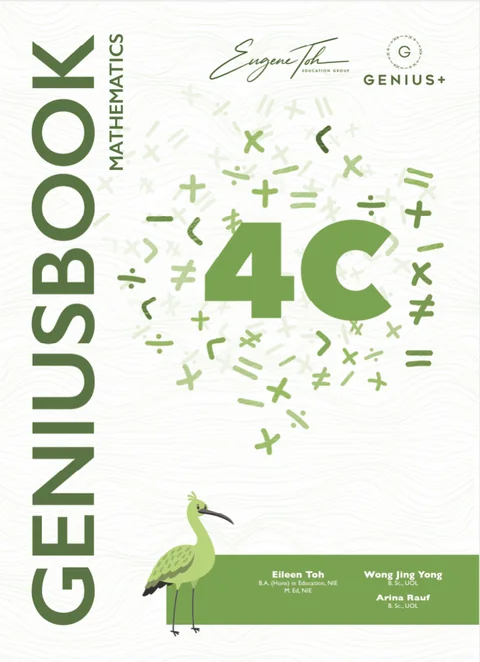
Your child learns from a complete, in-house curriculum, we write and publish our own, 60+ textbooks and 40+ workbooks, refined over eight years. The P4 materials are written to set up P5 deliberately, with fractions and area sequenced so nothing has to be re-learned the following year.
See how we write our materials →Why P4 is the year to act
P5 is, by volume and difficulty, the heaviest leap in the primary years: ratio, percentage, fraction-of-a-quantity and rate all land at once. A child who reaches it with shaky fractions or weak number sense spends P5 firefighting. So the most useful work often happens in P4, calmly, before the pressure arrives.
P4 brings the first real talk of subject bands. We focus on understanding, not anxiety, so a child performs to their actual ability.
Almost everything heavy in P5 leans on P4 fractions. Get them solid now and the next year is far less steep.
A child who masters P4 early can start P5 ahead. The acceleration is earned through foundations, not rushing.
Schedule & fees
| Class | Day & time | Branch | Availability |
|---|---|---|---|
| P4 Math | Monday, 3pm to 4:30pm | Punggol (Edgedale Plains) | Places available |
| P4 Math | Tuesday, 3:30pm to 5pm | Bukit Timah (Coronation Plaza) | Places available |
| P4 Math | Saturday, 2pm to 3:30pm | Upper Thomson | Places available |
| P4 Math | Sunday, 11am to 12:30pm | Pasir Ris | Places available |
Live class availability, refreshed from our class roster (last updated 2026-06-22). Current fees are confirmed at your free diagnostic consult, and financial assistance is available case by case for families with genuine need.
"When my daughter got AL5 in her P6 SA1 Math exam, I was desperate. Ms Eileen responded promptly and even requested to see my daughter's test paper first. Just 2 months later, my girl improved to AL3 in Prelims, and eventually scored AL1 at PSLE."
Across our wider tracking, 86% of P6 students improved 2 AL grades or more within a year. The work that makes that possible usually starts with solid P4 foundations.
Based on GPA's internal tracking of recent cohorts; individual results vary with each student's starting point and effort.
Where P4 leads next
For children who need to catch up or to accelerate, our P4 / P5 Expedite programme is built exactly for this transition, with diagnostic-led pacing and recorded prior-year foundation lessons. If steady weekly classes are the right fit instead, that is just as good a path.
Before you decide
We start every child by looking at a real piece of their work, so we can tell whether the issue is fractions, area, careless slips or pace, then recommend the lightest path that genuinely fixes it.
Free for P4 parents
The fraction, factor and area skills a child should be solid on before P5, with simple ways to check each one at home. A short, practical guide, sent to your inbox.
P4 is the better time to act. P5 lands ratio, percentage and fraction-of-a-quantity all at once, and most of it leans on P4 fractions and number sense. A child who reaches P5 with those foundations solid has a far calmer year than one who tries to fix the gaps while also learning the new material.
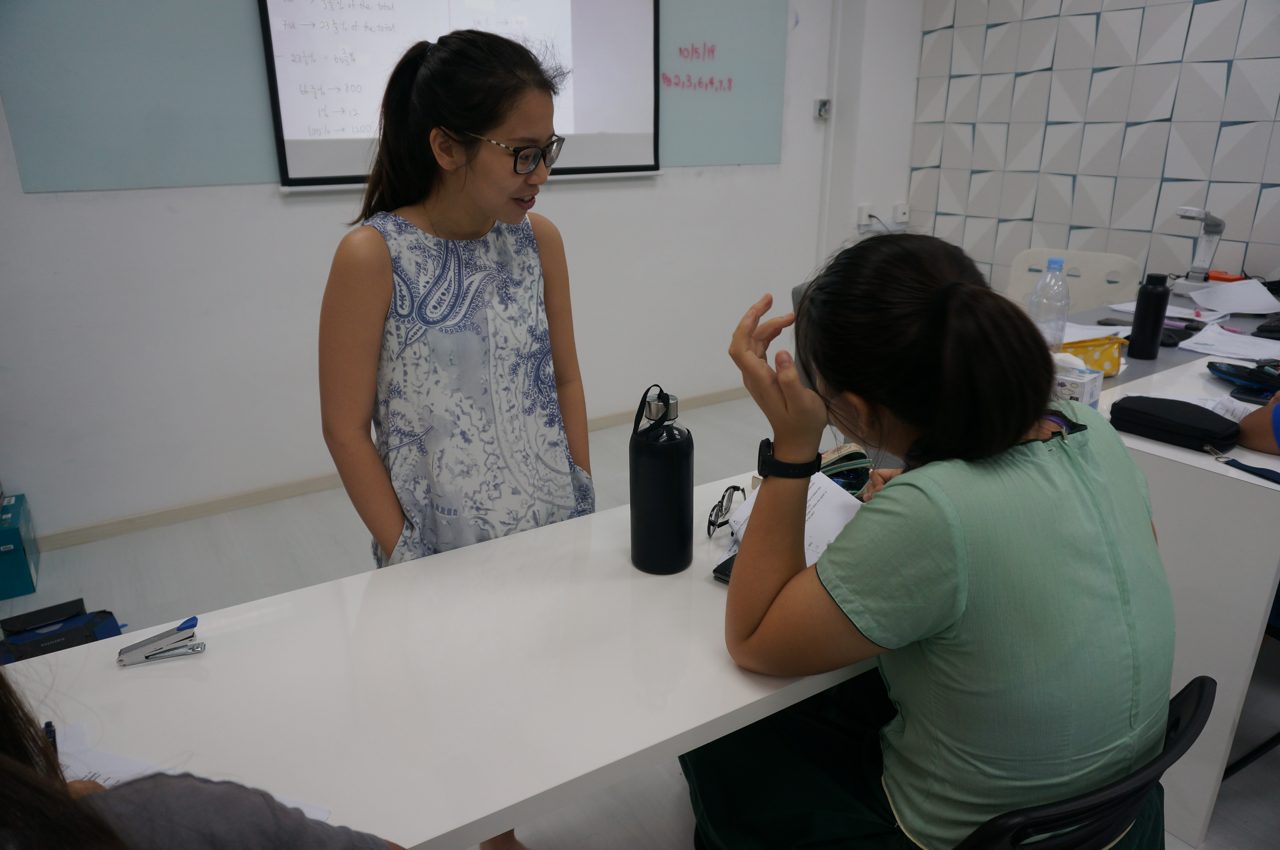
P3 and P4 classes are capped at six students, so every gap is caught and no child hides at the back. Every lesson is recorded for rewatching, and homework is marked and returned with personalised feedback each week.
We start with the bar model, so a fraction stops being a pair of numbers and becomes a quantity a child can see. From there we build equivalent fractions, comparing, and adding and subtracting with related denominators, the exact sequence P5 then extends. We diagnose first so we know which step actually broke down.
The P4 syllabus includes whole numbers to 100,000, factors and multiples, fractions (equivalent, comparing, adding and subtracting), decimals, area and perimeter of squares and rectangles and composite figures, angles, symmetry, tables and graphs, and multi-step word problems. We cover all of it, with the heavy emphasis on the topics P5 builds on.
Yes, a free trial lesson, one per child, starting with a short diagnostic. No pressure and no hard sell, we would rather you make a properly informed decision than a rushed one.
Start here
Book a free trial and diagnostic. We will look at a real piece of work and tell you honestly where your child stands, whether or not you ever join us.
Free trial · about an hour · a real diagnostic · no obligation, no hard sell.