Weekly Programme · Primary 3 to Primary 6
Most children can recite a fact. The marks come from explaining why, in the exact words an examiner wants. We teach the reasoning behind the science, so concepts transfer to the application questions that decide the grade.
A calm, weekly Science programme for P3 to P6. A small cohort, one dedicated tutor who knows every child, and our own in-house full-colour science textbooks. Math is our specialism, but families at our Punggol and Pasir Ris branches asked for Science, so we built it the way we build everything: properly. Classes run year-round, so you can join anytime.
Inside a Primary Science lesson
levels covered
MOE themes
per class
A note on this programme
Math is our specialism, and Science began because parents at Punggol and Pasir Ris asked for it. We kept it deliberately small: a single dedicated tutor, classes capped at eight, and a curriculum we wrote and publish ourselves. Because the cohorts are small, the honest first step is a quick chat about which level and branch has room. We will tell you plainly what is open and what is on a waitlist.
A small programme, built to GPA standards
The method
A child can repeat that "a force can move an object" and still lose the marks. The grade comes from explaining why, in the words the examiner is looking for.
PSLE Science rewards reasoning, not recall. Our lessons train the underlying concept first, then the exact scientific language used to express it, so understanding transfers from the textbook to the unfamiliar application question on the paper. It is the difference between a child who has memorised a chapter and one who can actually think with it.
Understand what is physically happening, not just the label.
Phrase the answer in precise, examiner-ready scientific terms.
Apply it to a new, unfamiliar question and reason to the answer.
What we cover
We cover all five MOE primary science themes, taught in sequence across P3 to P6, building toward full PSLE preparation in the final year. Each level has its own in-house textbook, written to match how Science is actually examined.
Diversity · living and non-living things, characteristics of organisms, and classification.
Cycles · life cycles in plants and animals, the water cycle, and matter cycles in the environment.
Systems · the human body, plant systems, and electrical systems and how components work together.
Energy · forms of energy, energy conversion, light, heat, and electricity.
Interactions · forces, magnets, food webs, adaptation, and the relationship between organisms and their environment.
The questions that decide the grade
These are open-ended Science questions in the PSLE style. A child who only memorised the chapter often freezes here. Have a go, then open the reasoning we teach.
A box is pushed across a smooth floor and again across a rough carpet using the same push. It travels a shorter distance on the carpet. Explain why.
The concept: the carpet creates a larger frictional force, which acts in the opposite direction to the box's motion.
The exam language: "There is greater friction between the box and the carpet. This frictional force opposes the motion of the box, so it slows down and stops over a shorter distance."
The marks live in naming friction, its direction, and the effect, not just saying "the carpet is rough".
A leafy plant is left in a dark cupboard for two days, then a leaf is tested for starch and shows none. Explain the result.
The concept: light is needed for photosynthesis, the process that makes food (starch) in the leaf.
The exam language: "Without light, the plant could not carry out photosynthesis, so no starch was made in the leaf."
A child who writes "the plant had no sun" loses the mark for not linking light to photosynthesis to starch.
A child can see a red apple on a table in a lit room. Explain how she is able to see the apple.
The concept: we see non-luminous objects when light reflects off them into our eyes.
The exam language: "Light from the lamp falls on the apple and is reflected from the apple into the child's eyes, so she can see it."
The full mark needs light reflected from the object into the eye, the phrase children most often miss.
In every lesson, the tutor models this exact phrasing again and again, until your child writes it without prompting.
What happens in class
With one dedicated tutor and at most eight children, no one sits passively. These are the consistent traits parents and students notice in our Science lessons.
Children are constantly asked "does this make sense?" and "can we eliminate this?", so they think through a problem instead of searching their memory for an answer.
A spring compressing, light reflecting into an eye, a shadow changing size. Children picture what is physically happening, so concepts become intuitive rather than abstract.
The tutor calls on children by name, gives thinking time, and expects participation. In a class of eight, every child is helped to think out loud.
Exact phrasing is modelled repeatedly, so children do not just understand a concept, they learn to express it in the words that earn full marks.
Topics are linked across chapters: friction to lubrication, oxygen to photosynthesis, height to potential energy. Science becomes a connected system, not isolated facts.
When a child struggles, the tutor guides them toward the reasoning, not the answer. Confidence grows alongside understanding, and both matter in an exam.
Your dedicated tutor
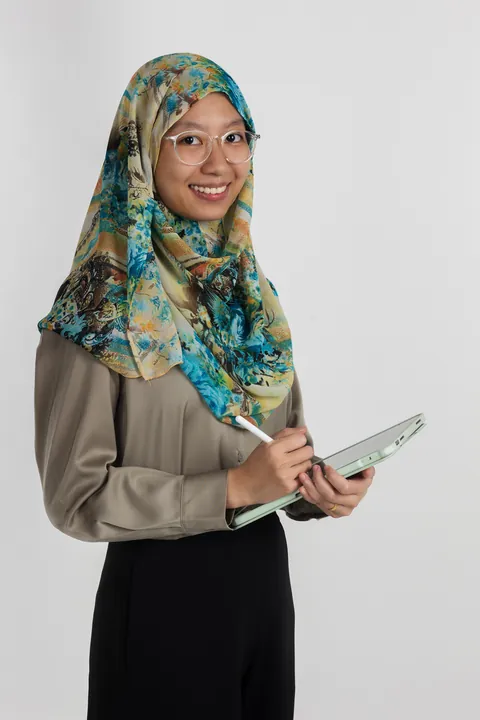
Ms Arina Rauf · Head of Publications & Curriculum Specialist
Ms Arina teaches Science the way it was meant to be taught: by making children think, not memorise. She wrote our in-house Science textbooks from scratch, and she stays with a class so she knows exactly where each child is strong and where the reasoning slips.
Strong subject grounding.
Teaching primary Science.
Wrote our Science textbooks.
Tutor allocation can vary by level and term, including planned cover. We will tell you exactly who is teaching your child's class when you enquire.
Who it suits
Primary Science here is a good fit if your child:
Learn to reason and explain, so understanding holds in the application questions.
A small class draws them out, with named questions and real thinking time.
Build exact exam phrasing and the reasoning the open-ended section rewards.
Our materials
A keepable resource
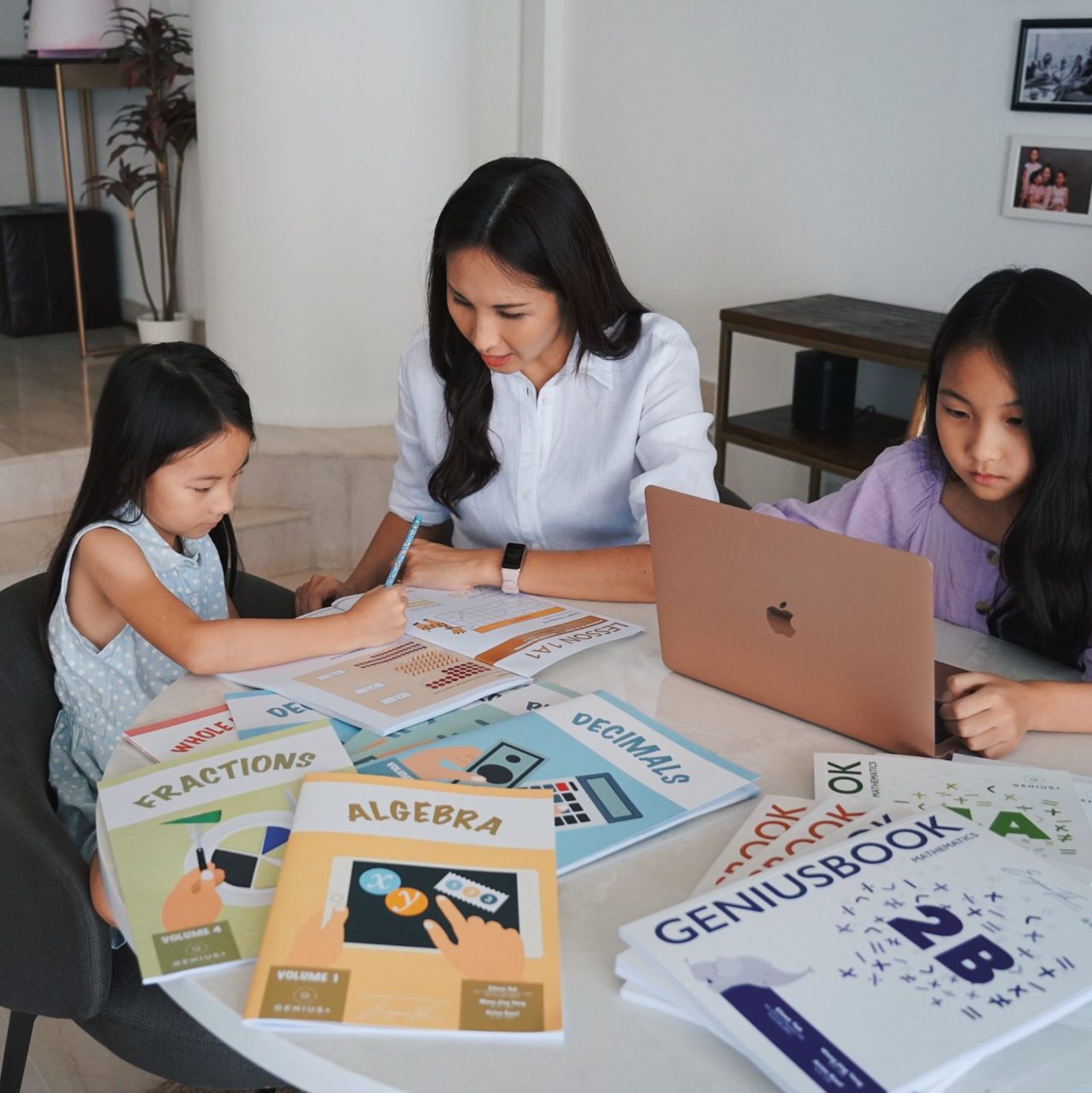
Each child receives a freshly printed, full-colour Science textbook they can write in, flag and revise from without a screen. It is part of the curriculum we write and publish ourselves, the same in-house standard that runs across everything we build at GPA.
Branches, format & fees
Edgedale Plains · weekly P3 to P6 Science
Pasir Ris West Plaza · weekly P3 to P6 Science
Format
Onsite at Punggol and Pasir Ris, in a small cohort capped at eight. Lessons run 1.5 hours for P3 and P4, and 2 hours for P5 and P6. Classes are ongoing and run year-round, so your child can join at any point in the term, with a pro-rated start.
| P3 & P4 | P5 & P6 | |
|---|---|---|
| Lesson length | 1.5 hours | 2 hours |
| Class size | Up to 8 | Up to 8 |
| In-house textbook | Included | Included |
| Fees | Quoted at consult | Quoted at consult |
Fees
Weekly Primary Science, P3 to P6
so the fee matches your child's level and schedule, with no surprises
Financial assistance is available case by case for families with genuine need. Just ask.
What a parent told us
“She stopped hiding her test papers. She started asking for extra practice.”
Based on GPA's internal tracking of recent cohorts; individual results vary with each student's starting point and effort.
Free sample, no pressure
We will send a short sample from our in-house Science materials, showing the concept, the exam language and the reasoning we train, so you can see the approach before you decide.
Many families pair Science with Math
Math is what GPA is known for, and many families pair Science with Math at GPA. Primary Math Weekly runs the same small-cohort, in-house-textbook approach, and pairing two subjects brings a multi-subject saving on your combined fees.
Primary Science runs for P3 to P6 at our Punggol and Pasir Ris branches. Because we keep the cohorts small, availability varies by level and term, so the simplest first step is a quick chat about which class has room. We will tell you plainly what is open and what is on a waitlist.
PSLE Science rewards reasoning, not recall. We teach the concept first, then the exact scientific language used to express it, so your child can apply what they know to unfamiliar, open-ended questions. It is the difference between a child who has memorised a chapter and one who can think with it.
Classes are a small cohort capped at eight, with one dedicated tutor who knows every child. Tutor allocation can vary by level and term, including planned cover, and we will always tell you exactly who is teaching your child's class when you enquire.
Every child receives a freshly printed, full-colour Science textbook for their level. We write and publish our own materials in-house, matched to how Science is actually examined, rather than reselling a workbook.
Yes. Classes are ongoing and run year-round, so you can join at any point in the term, subject to availability, with a pro-rated start. The simplest way in is to book a trial lesson, and we will guide the rest.
Fees are quoted at the diagnostic consult, so they match your child's level and schedule with no surprises. Financial assistance is available case by case for families with genuine need. Many families also pair Science with Math, which brings a multi-subject saving on the combined fees.
Weekly Science · join anytime
Book a trial lesson, and we will tell you honestly whether this small Science class is the right fit.