Primary 1 · Math · Singapore
At Genius Plus Academy, Primary 1 math is taught gently, so your child builds number sense and a real liking for the subject from the very first lesson. We grow number bonds, place value and addition and subtraction fluency step by step, in very small classes (P1 to P2 max 4), every lesson recorded, taught from our own in-house books.
Built for the 2026 Primary 1 cohort · last reviewed 20 Jun 2026
What we build in P1
A gentle, expert start
How P1 math is taught here
A child who counts on fingers for every sum, or who already says "I'm bad at math" at age seven, is carrying a gap that quietly grows. P1 is the year to fix both at once: the number sense underneath, and the confidence on top. We call the underlying skill Foundation Fluency, and it is the first of our primary Five Capabilities.
Before fast addition can happen, a child needs to see that 7 is 5 and 2, or 6 and 1. We build that picture with concrete objects first, then drawings, then numbers, so the idea sticks rather than being memorised.
Counting to 100 is one thing; understanding that 34 is three tens and four ones is another. We make place value concrete so addition and subtraction within 100 feel logical, not like a trick to remember.
In a class of four, a quiet child cannot hide and a struggling child is never left behind. Every lesson aims for small, real wins, so a seven-year-old leaves believing math is something they can do.

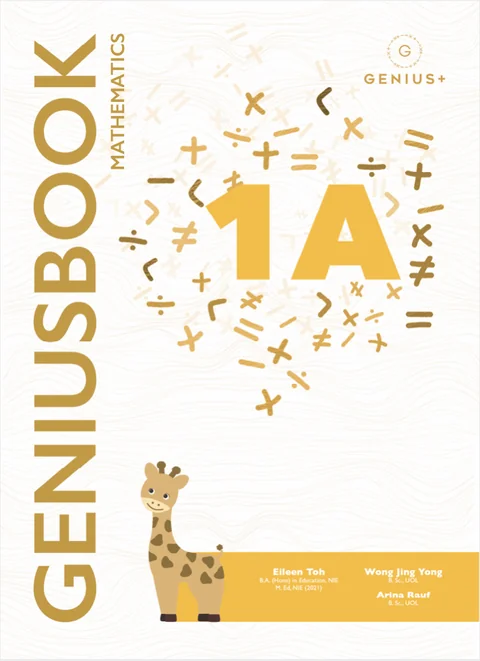
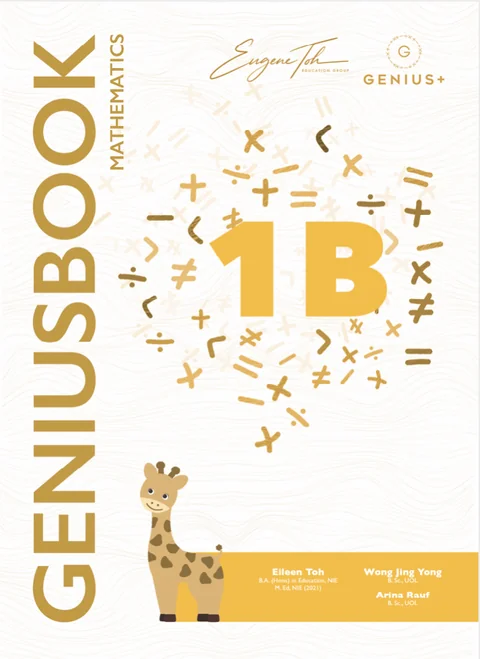
Your child learns from a complete, in-house curriculum, we write and publish our own, 60+ textbooks and 40+ workbooks, refined over eight years of classroom use. The Primary 1 GENIUSBOOK is paced gently, with clear pictures and plenty of room to write, so a young child is never overwhelmed by a wall of sums.
See how we write our materials →Why the first year counts
Primary 1 looks easy from the outside, which is exactly why gaps slip through. A child who never truly understood number bonds will struggle with regrouping in P2, then with word problems in P3. We would rather set the foundation right now, calmly, than try to repair it under exam pressure later.
The instinct for how numbers behave. It cannot be crammed later; it is grown in the first two years.
Writing working neatly, reading a question fully, checking an answer. We start these as small routines in P1.
A child who enjoys math at seven keeps showing up for it at twelve. The attitude is part of the curriculum.
Schedule & fees
| Class | Day & time | Branch | Availability |
|---|---|---|---|
| P1 Math | Private 1-to-1 only | Bukit Timah (Coronation Plaza) | By arrangement |
Live class availability, refreshed from our class roster (last updated 2026-06-22). Current fees are confirmed at your free diagnostic consult, and financial assistance is available case by case for families with genuine need.
"We found this centre via Google. My child made improvements quickly and now looks forward to the lessons. The tutors follow up with feedback after every school exam. Huge kudos to Mrs Toh and the entire teaching team for their commitment!"
Based on GPA's internal tracking of recent cohorts; individual results vary with each student's starting point and effort.
Where P1 leads next
Primary 1 is the opening chapter of one continuous programme. Children who start with us early move smoothly into P2 and beyond, because the method and the books never reset, they only build.
For parents starting out
We start every child with a short, friendly diagnostic, so we can tell you exactly where your child is and what, if anything, they need. No pressure, and no jargon.
Free for P1 parents
What "number bonds" and "place value" actually mean, why they matter, and three calm things you can do at home to help your child love math. We will send it to your inbox.
It is early, and for many children it is exactly right. P1 is not about racing ahead; it is about building number sense and a positive relationship with the subject before any gap or anxiety sets in. We start with a short diagnostic and will tell you honestly if your child would be better simply playing with numbers at home for now.
Very small. P1 and P2 classes are capped at four students, because the youngest learners need the most attention and the gentlest pace. Every lesson is recorded for rewatching at home, and homework is marked and returned with personalised feedback each week.
It is completely normal at this age, and it is exactly what we work on. Finger counting is a sign that number bonds have not yet become automatic. We build that fluency with concrete objects and visual number bonds first, so quick mental recall grows naturally rather than being forced.
The P1 syllabus centres on numbers to 100, number bonds, place value in tens and ones, addition and subtraction within 100, simple length and shapes, and reading a picture to answer a question. We cover all of it, with the emphasis on understanding rather than rote drilling.
Yes, a free trial lesson, one per child, starting with a short diagnostic. No pressure and no hard sell, we would rather you make a properly informed decision than a rushed one.
Start here
Book a free trial and diagnostic. We will see where your child is and tell you honestly what we think, whether or not you ever join us.
Free trial · about an hour · a real diagnostic · no obligation, no hard sell.