Genius+ Secondary Math · Sec 1 to 4 · E Math, A Math & IP · ongoing weekly classes, join the current term · Book a diagnostic →

Weekly Programme · Secondary 1 to 4 · Math

Secondary Math, taught as a system

In Secondary Math, the marks rarely go on the topic your child cannot do. They go on shaky algebra, the wrong method chosen under pressure, and working the examiner cannot follow. We fix the system behind all three.

One weekly programme for the whole journey, from the PSLE-to-Sec-1 jump through to the O-Levels. We cover Lower Sec, O-Level E Math and A Math, and the IP track, with the same lesson architecture, the same skill families, and the same mark-proof system in every class. The quality comes from the system, not from which tutor your child is given.

Sec 1 to 4, all tracks Small classes Onsite or Zoom
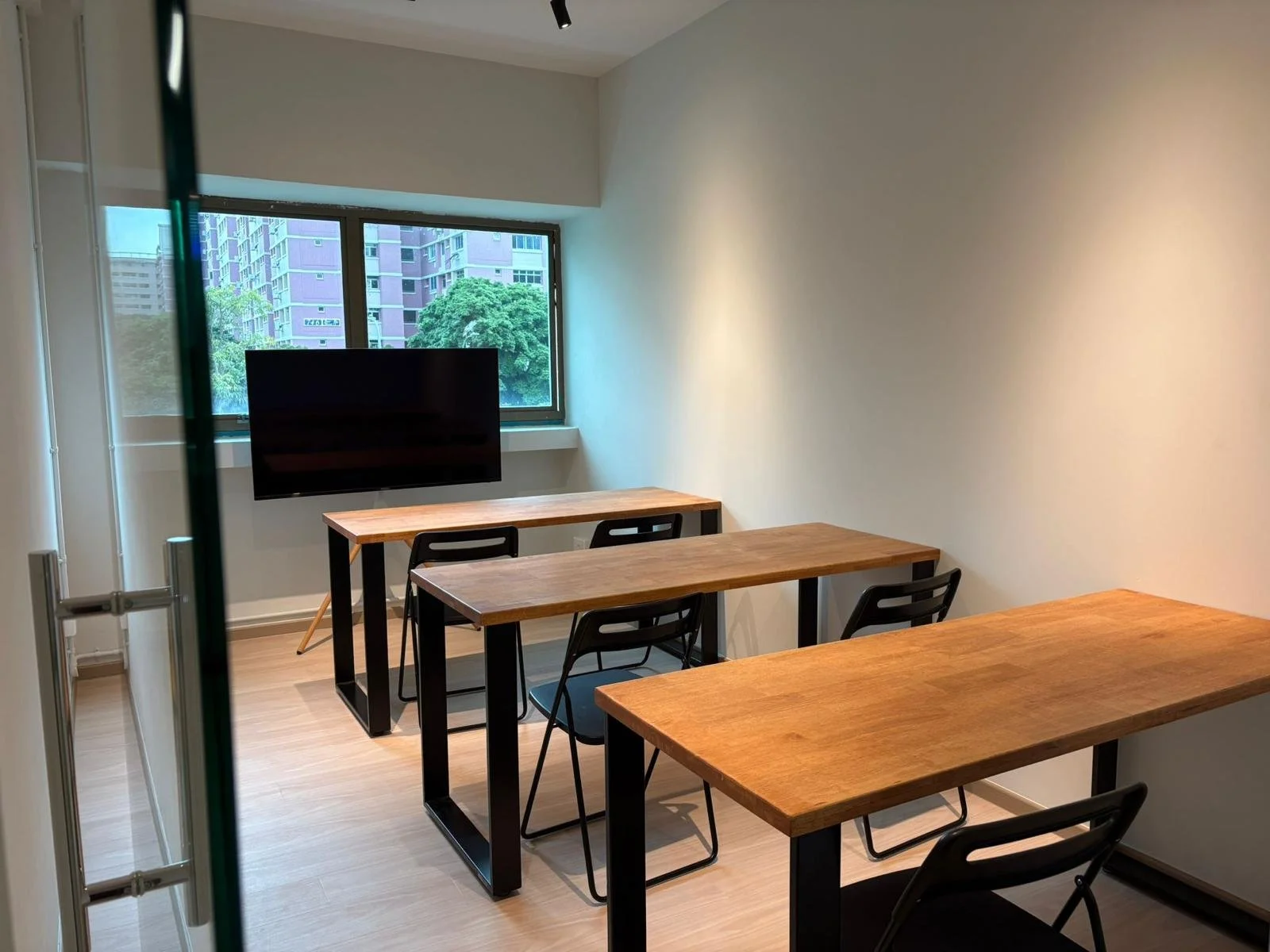
A small Genius Plus Academy Secondary Math class working through a problem with the tutor

4

tracks, one system

5

skill families

6

step lessons

Ongoing weekly · join anytime

This is a year-round programme, not a one-off camp. Classes run every week and you can join the current term whenever you are ready. We start with a diagnostic and trial, place your child in the right class for their level and track, and any lessons they miss are always on the portal as recordings. No rush, and no pressure.

Book a diagnostic & trial →

A system refined over years of classroom use

Sec 1 to 4 all tracks5 skill families7 error types
See the mark-proof system →
A Genius Plus Academy tutor guiding a Secondary student through marks-visible working

The idea behind the programme

At most centres, the tutor is the quality. Here, the system is.

At Genius+, the system delivers the quality, and the tutor is trained to deliver the system.

That is not a slogan. It is a curriculum we write and publish ourselves, 60+ textbooks and 40+ workbooks, a fixed six-step lesson design every class follows, a diagnostic that finds the real bottleneck before prescribing more practice, and a marking protocol built from real student scripts. Your child gets the same standard whichever class they are placed in, and whoever is teaching that week.

Diagnose

Find the actual bottleneck, not just the wrong answers.

Teach

Same six-step lesson, same skill families, every class.

Mark

Tag every error by type, then close the gap with drills.

One programme, four tracks

The same system, from Sec 1 to the O-Levels.

Lower Sec, O-Level E Math and A Math, and IP all sit under one weekly programme. We place your child in the right class for their level and school, then carry them through with the same method as they progress.

Lower Sec Math

Sec 1 to 2

The bridge from Primary. We rebuild number sense and algebra, teach students to translate English into Math, and give them a way to start every problem, so the algebra jump stops feeling like a wall.

For students on either the IP or O-Level path who feel suddenly out of their depth.

O-Level E Math

Sec 3 to 4

Full O-Level coverage: numbers, algebra, geometry, statistics and probability. Exam-style exposure with error tracking, and clear, logical working that earns method marks, not just the final answer.

For G2 and G3 students pushing from a C or B range into the A grades.

O-Level A Math

Sec 3 to 4

Surds, logs, trigonometric functions, the binomial theorem and calculus, built from familiar E Math foundations. Concept first, formula second, with fast feedback on every mistake.

A Math has a reputation as a subject only for naturally strong students. With the right explanations, most do far better than they expect.

IP Math

Sec 1 to 4

Aligned to IP school syllabuses for students who bypass the O-Levels and head toward H2 Math. Faster pace and more abstraction, met with clearer teaching and better-organised working rather than just harder questions.

For IP-school students who need structure and calm, not more volume.

Many Sec 3 and Sec 4 students take both E Math and A Math with us, as two classes. The fee is the same per class for every track. See fees and how placement works →

How we organise the curriculum

We teach five skill families, not topics in isolation.

Exams test across chapters, so we do too. Each family repeats and compounds across the years, which is why our students cope better with mixed-topic papers than students whose tuition goes chapter by chapter.

Algebra Toolkit

The core engine: indices, expansion, factorising, algebraic fractions, changing the subject, simultaneous equations, inequalities and quadratics. If algebra is shaky, everything else feels hard.

Graphs & Functions

Interpretation over drawing: gradients, intercepts, equations of lines, quadratic graphs, tangents, and what a graph actually means.

Geometry & Measurement

Structure and reasoning: angle reasoning, congruence and similarity with the scale-factor ladder, circles, mensuration, composite shapes, coordinate geometry and vectors.

Trigonometry

Routine beats panic: right-angle trig, bearings, elevation and depression, the sine and cosine rules, the area formula, and clean calculator habits.

Statistics & Probability

Reading discipline: data interpretation, averages and spread, cumulative frequency, box plots, sample-space probability and tree diagrams.

"We teach skill families, not topics in isolation, because exams test across chapters. That is why our students handle mixed-topic papers better."

See the thinking, not just the answer

A hard one, shown the way we teach it.

The reflex we train is the same in every family: read the structure first, then choose the method. Two examples, one from A-Math, one from E-Math, with the working a marker can follow. The maths here is checked, and signed off by Mrs Toh.

A-Math · Trigonometry

The R-formula turns two waves into one.

A child who recognises that a sin x + b cos x can be written as a single wave R sin(x + α) unlocks maximum, minimum and equation-solving in one move.

Express 3 sin x + 4 cos x as R sin(x + α):

R = √(3² + 4²) = √25 = 5

tan α = 4 / 3, so α = 53.13°

= 5 sin(x + 53.13°)

Maximum value = 5, at x = 36.87°.

The teaching point: a sine never exceeds 1, so the maximum is simply R. Spotting the structure does the work, not the calculator.

E-Math · Percentage

Reverse percentage, the one most get backwards.

The error is treating "15% off" as "add 15% back". The fix is to name what the given figure represents as a percentage of the original, then divide.

A jacket sells for $68 after a 15% discount.

Find the original price.

$68 is 85% of the original (100% − 15%).

Original = 68 ÷ 0.85 = $80

Check: $80 × 0.85 = $68. ✓

The teaching point: this is the same "what does one unit represent" discipline the Primary bar method builds, carried up into Secondary.

The lesson architecture

Every class follows the same six steps.

This is what "consistent lesson architecture" means in practice. Support fades step by step, so by the end of the lesson your child is working the way they will need to in the exam, alone and under realistic conditions.

1 · Recall warm-up

Retrieval practice that activates prior knowledge and prevents it decaying.

2 · Concept

Why it works, not just which steps to follow.

3 · Worked examples

Explicit "why this method" decision points, so students learn to choose, not copy.

4 · Guided practice

Error prevention while the habit is still forming. Support fades as competence builds.

5 · Independent attempt

The student works alone under realistic conditions, building exam independence.

6 · Exit check

A short closing test that reveals whether it truly clicked, not just looked like it did.

The mark-proof system

Most "careless mistakes" are not careless. They have a pattern.

Built from the top issues across real student scripts, our Mistake Taxonomy tags every wrong question by error type. You cannot fix what you have not named, so we name it first, then drill it out.

1 · Sign & brackets

Lost minus signs, mishandled brackets.

2 · Substitution

Wrong value put into the right formula.

3 · Rounding

Premature or wrong rounding at the end.

4 · Units

Right number, wrong or missing unit.

5 · Diagram reading

Misreading a figure, scale or graph.

6 · Method selection

The first method recognised, not the right one.

7 · Reasoning & working

Right idea, working the examiner cannot follow.

Seven error types. Name it, then close it.

Mark-visible working

One line per step, justification where it is required, key values boxed, the final answer in the right form. The examiner should never have to guess what your child was thinking.

Exam-simulation & debrief loop

Timed attempt, post-mortem by error category, targeted drills, then re-test. Each cycle closes a real gap. The loop is what turns practice into improvement.

Independence building

Scaffolding is faded on purpose: silent start, delayed feedback, no mid-solution confirmation. Students learn to convince the paper, not the tutor. Home life tends to improve as a side effect.

Who it suits

It works at both ends of the class.

The programme is a good fit if your child:

  • does the homework well but collapses in the exam;
  • has shaky algebra that makes everything else feel hard;
  • gets the right answer but loses marks because the working is unclear;
  • reaches for the first method they recognise, not the right one;
  • studies a lot but does not seem to improve.

Already strong

Many join because they are inconsistent: losing marks on easy questions and panicking on unfamiliar formats. We sharpen reliability.

Stuck in the middle

A clear structure so a hard-looking question stops feeling random, and method marks stop slipping away.

Far behind

We have worked with students who started from E8 or F9. Starting weak is not the problem. Staying weak without a system is.

We start with a diagnostic

Most tuition starts with "let's do more practice." We start with "what is the actual bottleneck?"

More volume only helps if it targets the real gap. So your trial doubles as a diagnostic. The tutor watches your child across five dimensions and writes up what they see, and you get that feedback before you decide anything.

  • Concept gap · does not yet understand the underlying principle.
  • Technique gap · knows the concept but cannot execute it reliably.
  • Method-choice gap · reaches for the wrong tool for the question type.
  • Exam-readiness gap · time, stamina and how they handle pressure.
  • Communication gap · working that loses marks even when the answer is right.
A Secondary student working through a timed Math paper during a diagnostic

What's included

Far more than the two hours in class.

  • Small classes so every student is seen, with caps kept low at each branch.
  • Our own materials, written and published in-house: 60+ textbooks and 40+ workbooks, with term textbooks refreshed every 10 to 12 weeks.
  • Every lesson recorded, onsite and Zoom, on the portal, for revision, exam prep or catch-up.
  • Weekly homework with detailed marking that explains why a step was wrong and how to fix it, not just a circled answer.
  • Unlimited 1-to-1 consults with your child's tutor, onsite or Zoom, at no extra charge.
  • WhatsApp support and clear progress tracking each term.

The unlimited free consults are ad-hoc help sessions with your child's existing tutor. They are different from our paid Private 1-to-1 programme, which is structured one-to-one tuition with a dedicated tutor.

A small Genius Plus Academy Secondary Math class in session

A curriculum we own

We do not teach from someone else's books. We write our own.

The questions, worked solutions and progression are part of a curriculum we write and publish ourselves, 60+ textbooks and 40+ workbooks, refined over years of classroom use. That is what lets us teach skill families across the years rather than chasing whatever chapter the school happens to be on this week.

Video: a GPA parent shares how her daughter went from maths anxiety to scoring A1 in Secondary From maths anxiety to A1: a parent's story (Secondary)

A parent's story, on camera

From maths anxiety to A1.

A GPA parent shares how her daughter went from maths anxiety in P5 to scoring A1 in Secondary.

Based on GPA's internal tracking of recent cohorts; individual results vary with each student's starting point and effort.

The people behind the system

The teachers who write the curriculum.

Mrs Eileen Toh, Founder of Genius Plus Academy

Mrs Eileen Toh

Founder & Curriculum Architect

Former MOE teacher, M.Ed (NIE). She authored the curriculum and the mark-proof system the whole Secondary programme is built on.

Ms JS Lee, a Genius Plus Academy Principal Tutor

Ms JS Lee

Principal Tutor

B.Sc. (Hons), trained under Mrs Toh to deliver the system. Known for calm, step-by-step explanations that make A Math feel doable.

Schedule, format & fees

Weekly classes, onsite or on Zoom.

ClassDay & timeBranchAvailability
S1 MathTuesday, 5pm to 7pmBukit Timah (Coronation Plaza)Places available
S1 MathSaturday, 3:30pm to 5:30pmPunggol (Edgedale Plains)Places available
S1 MathSaturday, 9am to 11amBukit Timah (Coronation Plaza)Places available
S1 MathSaturday, 4pm to 6pmPasir RisPlaces available
S1 MathMonday, 7pm to 9pmPunggol (Edgedale Plains)Places available
S2 Math (IP)Tuesday, 5pm to 7pmBukit Timah (Coronation Plaza)Places available
S2 MathSaturday, 11am to 1pmPunggol (Edgedale Plains)Waitlist
S2 MathSunday, 11am to 1pmBukit Timah (Coronation Plaza)Places available
S2 MathSunday, 3pm to 5pmPunggol (Edgedale Plains)New class, places available
S3 MathWednesday, 7pm to 9pmBukit Timah (Coronation Plaza)Places available
S3 MathSaturday, 9am to 11amPunggol (Edgedale Plains)Places available
S3 MathSunday, 1pm to 3pmBukit Timah (Coronation Plaza)Places available
S3 A MathTuesday, 7pm to 9pmPunggol (Edgedale Plains)Places available
S4 MathTuesday, 7pm to 9pmBukit Timah (Coronation Plaza)Places available
S4 MathFriday, 7pm to 9pmPunggol (Edgedale Plains)Places available
S4 MathSaturday, 12pm to 2pmPasir RisPlaces available
S4 MathSunday, 3pm to 5pmBukit Timah (Coronation Plaza)Places available
S4 A MathSunday, 5:30pm to 7:30pmBukit Timah (Coronation Plaza)Places available

Live class availability, refreshed from our class roster (last updated 2026-06-22). Current fees are confirmed at your free diagnostic consult, and financial assistance is available case by case for families with genuine need.

Format

One 2-hour lesson a week, term by term, ongoing all year. Switch between onsite and Zoom whenever you need to.

Small classes

Caps are kept low at every branch so each student is seen. We confirm the class size for your level when we place your child.

Where we run Secondary Math

Bukit Timah (Coronation Plaza) · Punggol · Pasir Ris · or live on Zoom. The same teaching and materials at every venue.

Taking both E Math and A Math?

Many Sec 3 and Sec 4 students do. These are two separate classes, each at the standard per-class fee. We can plan the timetable with you at the consult.

Fees

Quoted at your diagnostic consult.

Secondary Math uses the same fee structure as our upper-Primary classes. We will give you the exact figure for your child's level, track and venue at the consult, with no obligation.

  • Weekly 2-hour lessons, onsite or Zoom
  • Recorded lessons and marked weekly homework
  • Unlimited 1-to-1 consults, no extra charge
  • Our own textbooks and workbooks
Book your diagnostic consult

Financial assistance is available for families on MOE FAS or facing genuine difficulty. Mrs Eileen Toh reviews these case by case, in confidence.

How joining works

Four calm steps, no pressure.

You can join the current term whenever you are ready. Here is the path most families take.

Book a diagnostic

Tell us your child's level, school and track. We find the class that fits.

Trial & assess

Your child sits in a real class. The tutor observes across the five diagnostic dimensions.

Get the feedback

Within about a week you receive a written read on the real bottleneck, before you commit.

Join the term

If it is a good fit, register and start. Recordings cover anything missed along the way.

Free, no pressure

See how we teach Secondary Math.

Leave your email and we will send a sample of how the mark-proof system is taught, so you can see the working and the marking before you decide anything.

Needs individual attention?

Private 1-to-1, for specific topics.

For a student who needs individual help on specific topics, our Private 1-to-1 programme pairs them with a dedicated tutor for focused, one-to-one sessions, built on the same system and materials.

Questions parents ask

Which tracks does this programme cover?

All of Secondary Math, Sec 1 to 4, under one weekly programme: Lower Sec Math, O-Level E Math, O-Level A Math, and the IP track. We place your child in the right class for their level and school, and carry them through with the same system as they progress.

Can my child join part-way through the year?

Yes. This is an ongoing weekly programme, not a one-off camp, so you can join the current term whenever you are ready. We start with a diagnostic and trial, place your child correctly, and any earlier lessons are on the portal as recordings to catch up on.

What does "system over tutor" actually mean?

At most centres the quality depends on which tutor you get. Here it comes from the system: a curriculum we write ourselves, a fixed six-step lesson every class follows, a diagnostic that finds the real bottleneck, and a marking protocol that tags every error by type. The tutor is trained to deliver that system, so your child gets the same standard whichever class they are in.

My child does the homework but still fails the exam. What is different here?

Most tuition just adds volume. We change the error pattern instead, using the diagnostic, the Mistake Taxonomy that tags each wrong question by type, the mark-visible working protocol, and a timed simulation and debrief loop. That targets the gap that causes exam collapse, rather than practising what your child can already do.

How much does it cost?

Secondary Math uses the same fee structure as our upper-Primary classes. We quote the exact figure for your child's level, track and venue at the diagnostic consult, with no obligation. Financial assistance is available for families on MOE FAS or facing genuine difficulty, reviewed in confidence by Mrs Eileen Toh.

What is included beyond the weekly lesson?

Small classes, our own textbooks and workbooks, every lesson recorded, weekly homework with detailed marking, and unlimited 1-to-1 consults with your child's tutor at no extra charge, onsite or Zoom. These free consults are ad-hoc help with the existing tutor, and are different from our paid Private 1-to-1 programme.

Does taking both E Math and A Math cost double?

E Math and A Math are two separate classes, each at the standard per-class fee, so there are two lesson slots. We can plan the timetable with you at the consult so both fit around school.

Ongoing weekly · join the current term

The same system, all the way to the O-Levels.

Start with a diagnostic. We will tell you honestly where the marks are going, and whether we are the right fit.

Book a diagnostic & trial